The week before a child starts kindergarten can bring out all kinds of feelings in a family – excitement, pride, nerves, and plenty of questions. Will they feel confident speaking up? Can they follow routines? Are they ready to be part of a group, manage their belongings, and cope with a busier day? That is where a school readiness program preschool can make a genuine difference.
For many parents, school readiness sounds like learning letters and numbers early. Those skills matter, but they are only one part of the picture. A child who can recite the alphabet but struggles to separate from a parent, wait for a turn, or ask for help may still find the transition to school difficult. Readiness is broader, and much more human, than academic checklists.
What school readiness really means
A strong start to school is built on a mix of social, emotional, physical and early learning skills. Children benefit from knowing how to join a group, listen to simple instructions, manage changes in routine, and keep trying when something feels hard. They also need opportunities to build independence – things like unpacking a bag, washing hands, opening lunch containers, and moving between activities with growing confidence.
This is why quality preschool matters. In a thoughtful learning environment, children are not pushed to perform. They are guided, encouraged and given repeated chances to practise everyday skills that help school feel familiar rather than overwhelming.
A good readiness program also respects that children develop at different rates. Some are chatty and socially confident but need support with focus. Others are quiet observers who take time to warm up, yet show strong problem-solving skills once they feel secure. Readiness is not about making every child the same. It is about helping each child build the foundations they need for their own next step.
What a school readiness program preschool should include
The most effective programs weave readiness into everyday experiences instead of treating it like formal tutoring. Young children learn best through play, routines, conversation and guided exploration. That means the strongest preschool programs look calm, engaging and purposeful, not overly rigid.
Social and emotional confidence
One of the biggest parts of starting school is learning how to be with others in a larger, more structured setting. Children need chances to share, negotiate, take turns, solve small conflicts and work as part of a group. They also need emotional language – words for feelings, strategies for calming down, and the reassurance that adults are there to support them.
This matters because a confident child is more likely to participate, ask questions and settle into new relationships. Emotional resilience does not appear overnight. It grows when educators consistently help children recognise feelings, manage disappointment and celebrate effort.
Communication and early language
Children do not need to be reading before school starts, but they do benefit from strong language foundations. Listening to stories, joining conversations, following instructions, singing songs and talking through ideas all support later literacy. These experiences build vocabulary, comprehension and confidence in expressing needs.
In practice, this can look quite simple. Group discussions, storytelling, pretend play and one-on-one chats with educators all help children make sense of language. A child who can explain what they need, understand routines and engage in conversation is often better placed to settle into the classroom environment.
Early numeracy and literacy concepts
School readiness includes exposure to concepts that support formal learning later on. That might mean recognising patterns, noticing shapes, counting during play, hearing rhyme, identifying their name, or becoming interested in books and mark-making. The key word is exposure, not pressure.
When these ideas are introduced in playful, meaningful ways, children build familiarity without feeling tested. Counting blocks, drawing maps, matching pictures, exploring sounds in songs, and looking at print in the environment all contribute to readiness in a natural way.
Independence and self-help skills
Parents are often surprised by how much independence affects the school transition. A child who can manage simple tasks on their own usually feels more capable and less anxious. Opening lunch boxes, using the toilet confidently, packing away belongings, and putting on a hat may seem small, but they matter in a busy school day.
Preschool supports these habits through routine and repetition. Educators gently encourage children to try for themselves, while still offering help when needed. Over time, children begin to trust their own abilities, which carries into many other areas of learning.
Why play-based learning works so well
Some families worry that a play-based preschool may not be structured enough for school preparation. In reality, quality play-based learning is often one of the best pathways to readiness because it reflects how young children naturally learn.
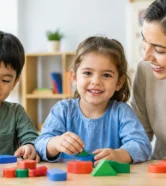
When children build with blocks, they are learning persistence, spatial awareness and early maths concepts. When they engage in pretend play, they practise communication, cooperation and problem-solving. When they paint, climb, sort, dig, listen and question, they are developing fine motor skills, physical coordination, concentration and curiosity.
The value lies in intentional teaching. Skilled educators do more than supervise play. They extend thinking, model language, support friendships and design experiences that help children practise the exact skills they will need at school. It looks joyful, but it is also purposeful.
How to tell if a preschool program is genuinely preparing children
Not every school readiness approach will look the same, and that is fine. Different centres may use different routines, environments and teaching styles. What matters is whether the program helps children grow across multiple areas, not just one.
A strong preschool program usually has a clear daily rhythm, warm educator-child relationships, and experiences that encourage communication, independence and cooperation. You should be able to see children actively engaged rather than simply being kept busy. You should also notice that educators understand each child as an individual.
It is worth asking how the service supports transitions, how it communicates progress with families, and how it responds when a child needs extra support. Readiness is stronger when educators and parents work together, sharing observations and helping children build consistent routines between home and preschool.
For families in Baulkham Hills, this often matters even more when balancing work, commuting and the emotional weight of choosing the right early learning environment. Trust comes from knowing your child is being nurtured as a whole person, not hurried through milestones.
The trade-off parents should know about
There is a common temptation to look for the most academic program possible. It can feel reassuring to see worksheets, strict desk-style tasks or formal lessons because they appear school-like. But for preschool-aged children, more formal does not always mean more effective.
If a program focuses too heavily on early academics, children may miss out on the social and emotional foundations that actually make classroom learning possible. On the other hand, a preschool experience that is only free play without thoughtful guidance may not provide enough support for routines, communication and independence.
The best balance sits in the middle – warm, structured, play-based learning with clear developmental goals. Children need room to explore and imagine, alongside gentle preparation for group learning, transitions and self-management.
Every child will be ready in their own way
One of the most reassuring things parents can hear is that school readiness is not a race. Some children need more time with separation. Some need support with confidence in groups. Some are physically independent but still learning how to cope when plans change. This is normal.
A well-designed school readiness program preschool does not expect perfection. It builds skills step by step, in a safe and encouraging setting. At Inspire & Innovate Childcare, that kind of child-centred approach reflects what many families are truly looking for – not pressure, but steady growth, trusted relationships and a genuine partnership in helping children feel ready for what comes next.
If your child is moving towards school in the next year or two, it helps to look beyond the question of what they know and ask how they feel, how they connect, and how they cope. Confidence, curiosity and resilience will carry them a long way – and those are exactly the qualities thoughtful preschool experiences are designed to nurture.