If you have ever toured a service with a clingy two-year-old on your hip while trying to picture their day without you, you already know this is not a small decision. Choosing toddler learning programs NSW families can rely on is about much more than filling the week. It is about finding a place where your child feels safe, understood and genuinely excited to learn.
The toddler years are full of big changes packed into a short time. Language starts to bloom, confidence grows in bursts, and emotions can swing from delight to frustration in a matter of minutes. A strong learning program recognises that this stage is not simply a lead-up to preschool. It has its own rhythms, needs and opportunities, and when children are supported well, those early experiences can shape how they relate to learning for years to come.
What good toddler learning programs in NSW really look like
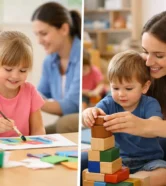
At this age, learning should not feel forced or overly academic. Toddlers learn best through play, repetition, movement, conversation and secure relationships. A quality program builds learning into everyday moments – sharing blocks, washing hands, singing during transitions, painting at an easel, helping pack away, listening to a story, or exploring leaves in the outdoor area.
That may sound simple, but there is real intention behind it. Educators should be planning experiences that support language, early problem-solving, physical coordination, social confidence and emotional regulation. The best programs make this look natural because toddlers do not learn in neat subject areas. They learn through doing, noticing, trying again and feeling supported while they work things out.
A well-designed environment matters too. Spaces should be calm enough to avoid overwhelming children, yet stimulating enough to invite curiosity. You want to see age-appropriate resources, safe indoor and outdoor areas, and routines that help toddlers know what comes next. Predictability builds security, and security is what makes learning possible.
Why play-based learning matters in toddler learning programs NSW parents consider
Many parents understandably ask whether their child will be learning enough if the program is play-based. It is a fair question, especially when school readiness is already on your mind. The truth is that for toddlers, play is not a break from learning. It is the learning.
When a toddler fills and empties containers, they are exploring volume, control and cause and effect. When they imitate cooking in a home corner, they are developing language, memory and social understanding. When they negotiate over a toy, with help from an educator, they are learning skills that sit at the heart of later classroom success – turn-taking, persistence, empathy and communication.
That does not mean every program that says it is play-based will be the right fit. Some settings are wonderfully child-led but may feel too unstructured for a family that values a very clear routine. Others may offer a more guided rhythm that suits children who thrive on consistency. It depends on your child’s temperament as much as the provider’s philosophy.
The signs families should look for
A brochure can tell you what a service hopes to offer. A visit usually tells you what daily life actually feels like.
Start with the atmosphere. Are educators warm, calm and present, or do they seem rushed? Do they speak respectfully to children, even during tricky moments like nappy changes, transitions or disputes over toys? Toddlers need adults who are emotionally steady. A nurturing tone is not just nice to have. It creates the trust children need to settle, explore and build confidence.
Look closely at engagement. Are children actively involved, or wandering without much support? You are not looking for perfect behaviour – toddlers are toddlers – but you do want to see purposeful play and educators who know when to step in, when to guide and when to let children try independently.
It also helps to ask how the program supports individual development. Some toddlers are chatterboxes. Others take their time. Some jump straight into new experiences. Others watch from the edge before joining in. Strong programs do not treat these differences as problems to fix. They adapt expectations and experiences so each child can grow at their own pace.
Questions worth asking before you enrol
Parents often feel pressure to focus on vacancies, fees and logistics first. Those practical details matter, of course, but they should sit alongside questions about your child’s day-to-day experience.
Ask how educators help new toddlers settle into care. A thoughtful transition process can make a huge difference, especially if this is your child’s first time in a group setting. Ask how routines are handled, including meals, sleep, toileting and rest times. Consistency between home and care is not always possible, but good communication helps everyone support the child more smoothly.
It is also worth asking how learning is shared with families. You should come away with a clear sense of how educators observe development, plan experiences and communicate progress. Some services do this through daily updates, conversations at pick-up, learning stories or regular reflections. The format matters less than the substance. Families should feel informed, not left guessing.
If your child has additional needs, sensitivities or developmental concerns, ask how support is tailored. The answer should feel open, respectful and practical. Families need partnership, not vague reassurance.
Safety, relationships and routine are not extras
When parents compare programs, there can be a temptation to focus on visible activities – art tables, sensory play, incursions, themed days. These can all add value, but they should never distract from the foundations.
For toddlers, the strongest learning happens when three things are in place: safety, secure relationships and a predictable routine. Without them, even the most creative program can feel unsettled. With them, ordinary moments become rich learning opportunities.
Safety includes more than supervision and clean environments, though both are essential. It also means emotional safety. Children need to know that their feelings will be met with patience, that mistakes are allowed, and that trusted adults will help them navigate frustration, separation and change.
Relationships matter just as much. Toddlers learn through connection. When educators know a child well – what comforts them, what sparks their interest, when they need support and when they want independence – learning becomes more meaningful.
Finding the right fit for your family
There is no single perfect model that suits every family. A toddler who thrives in a lively group may enjoy a busier centre environment. Another may do better in a smaller setting with a gentler pace. Some families need long day care to support work hours. Others are comparing centre-based care with family day care because home-like environments feel more comfortable at this stage.
That is why the right question is not only, “Is this a good program?” It is, “Is this a good program for my child?” A high-quality service should be able to explain not only what it offers, but why those choices support toddler development.
For families in areas such as Baulkham Hills, it can help to look for providers that understand local family needs while still keeping the child at the centre of every decision. Inspire & Innovate Childcare, for example, reflects the kind of approach many parents value – warm relationships, structured support and learning experiences shaped around each child’s stage of development.
What progress can look like in the toddler years
Growth in a strong toddler program is not always dramatic from one week to the next. Often it shows up quietly. Your child starts using a new word at dinner. They wash their hands without being prompted. They begin to wait for a turn, recognise a routine, join a group experience or separate more confidently in the morning.
These small shifts matter. They are the building blocks of independence, resilience and school readiness later on. Not every child will move at the same speed, and that is normal. Progress in toddlerhood is rarely linear. There are leaps forward, pauses, regressions and sudden bursts of new skills. A quality program understands that development is not a race.
As a parent, trust your observations. If your child seems secure, engaged and gradually more confident, that tells you a lot. If something feels off, ask questions. Good providers welcome that conversation because family partnership is part of good early education, not separate from it.
The best toddler learning programs do not try to rush children through childhood. They protect it, support it and use it well. When a program combines care, play, routine and genuine developmental insight, toddlers are given the space to build bright futures in a way that feels safe, joyful and right for their age.