A toddler stacking cushions into a wobbly tower is doing far more than making a mess in your lounge room. In those moments, holistic child development activities are already at work – building motor skills, problem-solving, confidence, language and emotional resilience all at once. That is why the best learning experiences for children rarely fit into one neat box.
For families, this can be reassuring. You do not need a cupboard full of expensive resources or a timetable packed with extras to support your child well. What matters more is offering experiences that nurture the whole child – how they move, think, communicate, relate to others and understand themselves.
What holistic child development activities really look like
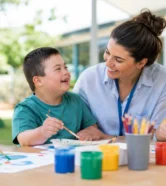
When educators talk about a holistic approach, they mean seeing children as complete learners rather than focusing on one skill at a time. A painting activity, for example, is not only about creativity. It can also strengthen hand control, encourage decision-making, expand vocabulary and create opportunities for children to express feelings.
This matters because development does not happen in separate lanes. A child who feels safe and connected is more likely to explore. A child with strong physical coordination may find it easier to join group games. A child who can communicate their needs clearly often feels more confident in new environments. Each area supports the others.
That is also why the right activity depends on age, temperament and stage of development. Some children thrive in lively group play. Others need quieter, slower experiences before they are ready to join in. There is no single checklist that suits every family.
8 holistic child development activities families can try
1. Story time with conversation
Reading together supports early literacy, but the real value grows when stories become a shared conversation. Pause to ask what your child thinks will happen next. Wonder aloud about how a character feels. Invite them to point, name, predict and retell.
For babies, this might simply mean looking at bright pictures and hearing your voice. For preschoolers, it can become richer back-and-forth discussion. School-aged children may enjoy acting out scenes or creating a different ending. In every case, story time supports language, listening, attention and emotional understanding.
2. Open-ended construction play
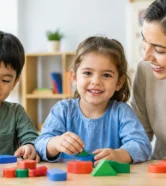
Blocks, loose parts, boxes, magnetic tiles and recycled materials give children room to test ideas without a fixed outcome. They learn cause and effect, balance, planning and persistence. They also practise coping when things fall over, which is a useful life skill in itself.
Construction play can be wonderfully social too. Siblings or peers need to negotiate roles, share materials and solve problems together. If your child prefers solo play, that is fine as well. Independent building often strengthens concentration and confidence.
3. Music, movement and rhythm games
Children do not need formal dance lessons to benefit from movement. Singing action songs, marching to a beat, clapping patterns or making up a silly dance in the kitchen all support coordination, memory and body awareness.
Music is especially helpful for children who respond strongly to routine and repetition. Predictable songs can ease transitions, calm nerves and help with language recall. On the other hand, some children find noisy group music overwhelming, so quieter musical play may suit them better.
4. Sensory play with purpose
Sensory play often looks simple – water tubs, playdough, sand, rice trays or finger painting – but it gives children rich information about texture, pressure, movement and cause and effect. It can also be deeply calming for some children.
The key is matching the experience to the child. One child may happily squelch mud between their fingers, while another may find the feeling unpleasant and prefer scooping tools instead. Holistic child development activities should stretch children gently, not force them into distress.
5. Gardening and nature exploration
Watching a seed sprout teaches patience in a way few adult explanations can. Watering herbs, collecting leaves, spotting insects or talking about the weather helps children notice patterns and build respect for the world around them.
Nature play also supports physical development through digging, carrying, balancing and climbing. Emotionally, outdoor time can bring a sense of calm and freedom that busy indoor settings do not always provide. Even a small balcony pot or a walk through the local park can create valuable learning moments.
6. Pretend play and role play
When children play shops, doctors, families, cafés or classrooms, they are making sense of the world. They practise language, social rules, empathy and flexible thinking. Pretend play also lets them revisit experiences that felt confusing or exciting.
A child who has recently started childcare, for instance, may begin acting out drop-off routines with dolls or toys. This is not random. It can be a healthy way to process change and build emotional security. Adults do not need to direct every scenario. Often, the most helpful role is to observe, join gently when invited and follow the child’s lead.
7. Simple helping jobs at home
Packing away toys, wiping the table, watering plants, matching socks or helping prepare fruit can do more for development than many parents realise. These everyday tasks build independence, responsibility, motor coordination and a sense of belonging.
They also send an important message: you are capable, and you are part of this family team. Younger children might carry napkins to the table. Older children can take on more steps and problem-solve independently. It may take longer at first, but the long-term benefit is worth the extra patience.
8. Cooperative games and group play
Board games, turn-taking ball games, treasure hunts and shared creative projects help children learn how to wait, listen, negotiate and cope with winning or losing. These are skills that matter in childcare, preschool and school settings.
Not every child finds group play easy. Some need support learning how to enter play, share ideas or manage frustration. Gentle modelling from adults can help. Phrases like, “Can I have a turn when you’re finished?” or “Let’s work out a plan together” give children practical language they can use again.
The role of relationships in holistic development
Activities matter, but relationships matter more. A well-planned experience has the greatest impact when a child feels secure, seen and encouraged by the adult beside them. Warm responses, eye contact, shared laughter and calm guidance all shape how children engage with learning.
This is particularly important for younger children, who build confidence through trusted connections. It also matters for older children navigating friendships, school expectations and growing independence. In nurturing environments, children are more likely to take healthy risks, ask questions and keep trying when something feels difficult.
That is one reason quality early learning settings place such strong value on educator-child relationships. At Inspire & Innovate Childcare Baulkham Hills, for example, play-based experiences are designed to support each child as a whole learner, with careful attention to their stage, strengths and sense of belonging.
When extra support may help
Children develop at different rates, and variation is normal. Still, if you notice ongoing challenges with communication, coordination, behaviour, social connection or emotional regulation, it can help to speak with your GP, child health nurse or educator. Early support does not mean something is wrong. Often, it simply gives families clearer strategies and peace of mind.
The aim is never to push children faster than they are ready for. It is to understand them well enough to offer the right support at the right time.
Building bright futures together often starts with ordinary moments – a book before bed, a muddy patch in the garden, a song in the car, a child proudly carrying their own lunchbox. When those moments are chosen with care, they do more than fill the day. They help children grow with confidence, curiosity and a strong sense of who they are.